
Prevention communications resources
Prevention communications are an essential component of a comprehensive substance use prevention strategy.
How we communicate about substance use can shape attitudes, perceived norms, and behavior. Providing youth and their parents/caregivers with credible, accurate, and age-appropriate information framed in a way that makes the message accessible to them is an integral part of a comprehensive prevention strategy.
Effective prevention communications goes beyond simply sharing information. It entails using the best available evidence to intentionally craft and deliver messages that promote positive attitudes, beliefs, social norms, and behaviors.
The goal is not simply to communicate more, but to communicate intentionally, accurately, and in ways that align with prevention science.
Messaging for substance use prevention involves:
- Clarifying your prevention goal. Whether the goal is to build support for prevention, strengthen positive norms, or prevent the onset or escalation of substance use, the approach should align with the desired outcome.
- Using evidence-aligned strategies. Select messaging approaches based on what research tells us is effective, not simply what is familiar, attention-grabbing, or easy to implement.
- Making messages developmentally and contextually appropriate. Consider young people’s developmental stage, culture, experiences, and the local community when developing and delivering messages.
- Communicating accurate social norms. Youth and adults often overestimate how common or accepted substance use is among their peers. Most young people choose to be substance-free, yet many believe substance use is more prevalent and accepted than it actually is. Sharing accurate, positive local norms can help correct these misperceptions.
- Being intentional about how messages are framed. What we emphasize, how we describe an issue, and what we leave out can influence how young people interpret a message and what they do next. Poorly framed messages can unintentionally reinforce the very attitudes and norms prevention efforts seek to change.
Communication Is Everywhere
Parents, schools, and communities are already communicating about substance use routinely through conversations, classrooms, newsletters, emails, social media, posters, and campaigns. A prevention-focused communications approach helps ensure the messages shared with youth work to support healthy choices.
When we inform our messaging by communication science, we increase the likelihood that those messages will change attitudes and behaviors, and shape the social norms of our communities.
ADAPT’s training, technical assistance, and resources can help you apply the best available evidence to strengthen prevention communications and maximize their impact on youth. Below is an overview of the prevention communications resources available to you. You can reach us at adapt@wb.hidta.org if we can be of any assistance!
Prevention Communications Resources
The following resources can be downloaded directly from our Prevention Intervention Resource Center in the section titled ‘Prevention Communications.’
Be sure to also check out previous prevention messaging campaign resources.
- Framing Fundamentals Campaign
- MIND the MESSAGE Campaign
- MIND the MESSAGE: Beyond the Basics Campaign
General Prevention Communications
Substance Use Prevention Communications Toolkit
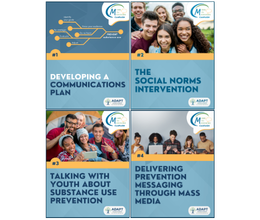
Substance Use Prevention Communications: Quick-Reference Tools
Sharing Substance-Related Information with Youth 11-18: Integrating the Best Available Evidence to Protect against Unintended Consequences
Social Norms Approaches
The social norms approach is one of the most effective prevention communications strategies. By elevating the truth that most youth hold positive attitudes and are not using substances, this approach relies on widely sharing these positive norms to correct misperceptions and shape behavior. Access our Social Norms Resources page for more information and specific resources that align with this strategy.
A Guide to Implementing a Social Norms Media Campaign for Substance Use Prevention in Secondary Schools